Surgery is what worries owners most, and reasonably so. Here’s how we make it as safe as we can, and what you can expect.
Procedures We Perform
- Spays and neuters
- Mass and lump removals, with histopathology
- Bladder stone removal
- Wound repair and abscess treatment
- Exploratory abdominal surgery
- Foreign body retrieval
Before
Every surgical patient has a physical exam and pre-anesthetic bloodwork so we know what we’re working with. The anesthetic protocol is built for the individual patient: age, breed, weight, and any conditions they already have. We’ll call you with anything we find that changes the plan.
Surgery mornings are deliberately unhurried. Sedation goes in early, before anything uncomfortable happens, so your pet isn’t frightened at the point we induce anesthesia. That isn’t only kindness: a calm patient needs less anesthetic to stay safely under, and comes around better afterward.
During
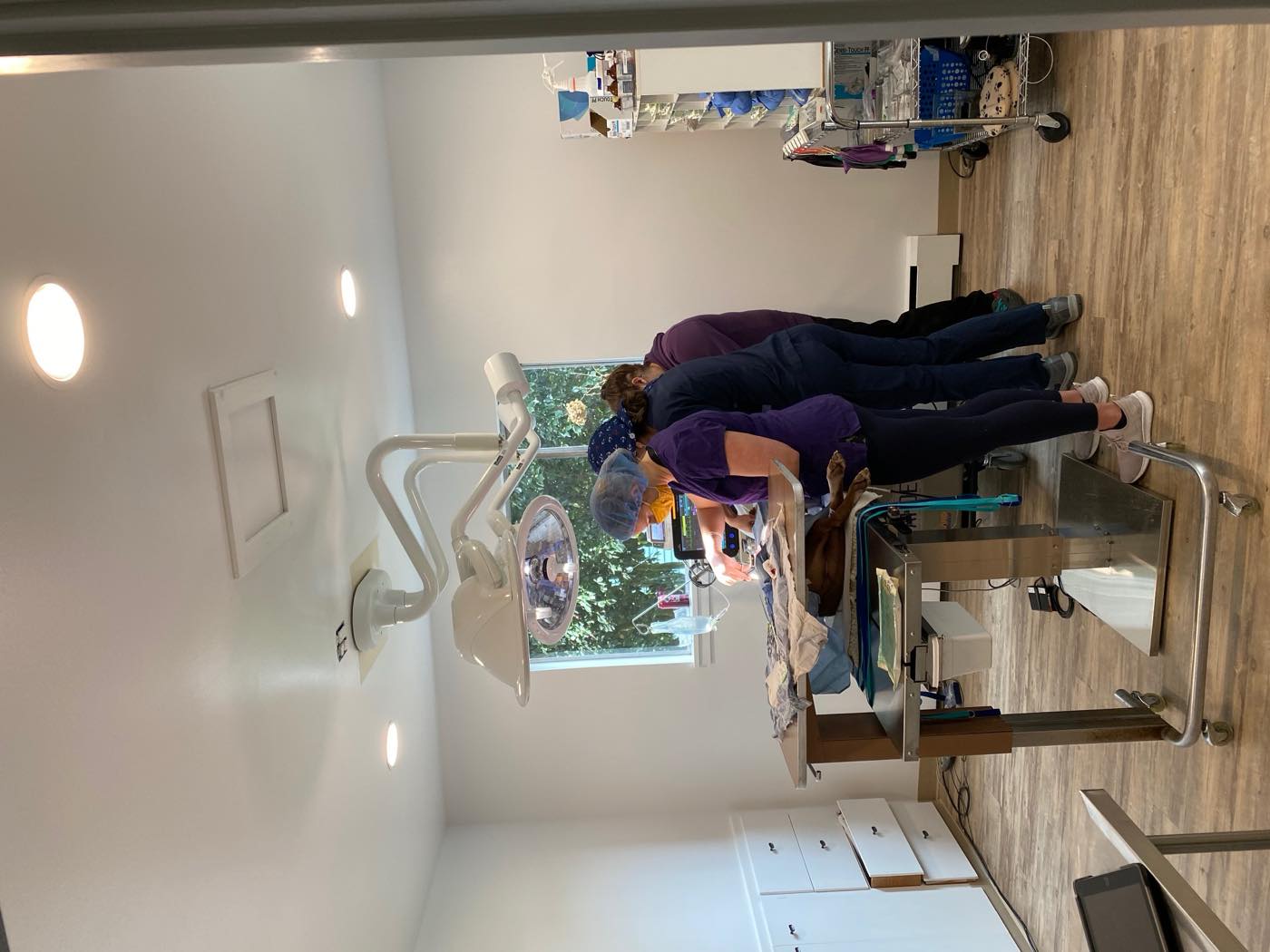
A team member is assigned to your pet’s anesthesia and does nothing else. We monitor heart rate and rhythm, blood pressure, oxygenation, carbon dioxide, and temperature continuously. Patients are on IV fluids and kept warm throughout, because heat loss under anesthesia is one of the most under-appreciated risks in the field.
After
Pain is managed with more than one drug class, starting before the first incision rather than after your pet wakes up. Coming around from anesthesia is disorienting, so somebody sits with your pet through it, somewhere warm and quiet, instead of leaving them to wake up alone in a kennel.
Most patients go home the same day with written instructions, medication, and a direct line to call if anything worries you. We follow up.
If we aren’t the right hospital for something (complex orthopedics, emergency neurosurgery), we’ll tell you plainly and refer you somewhere excellent.